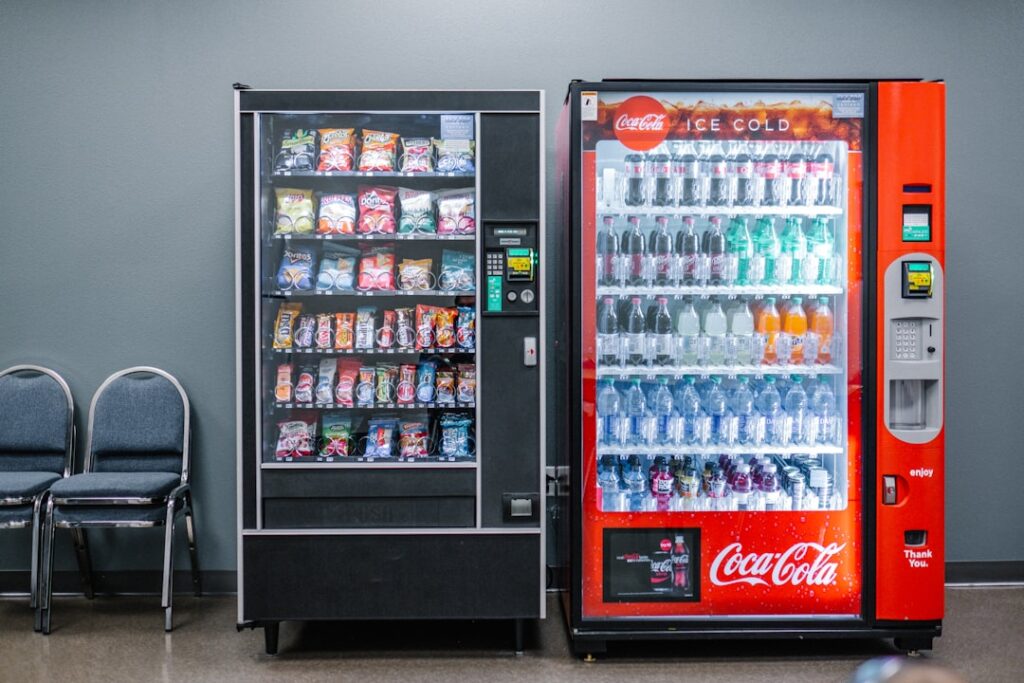
A vending machine is equipment. Full-service vending is an ongoing managed program. The difference matters because a workplace needs more than a machine delivered to a breakroom: products must remain available, payments must work, equipment must stay clean and problems must be resolved.
A reliable program aligns equipment, products, technology and service with the way employees actually use the location. The precise scope varies by provider, so businesses should compare responsibilities as carefully as product prices.
Quick answer: What is full-service vending?
Full-service vending generally includes provider-owned equipment, installation, product selection, regular stocking, inventory management, routine cleaning, maintenance, repairs and customer support. Many programs also include cashless payment options and remote monitoring. The host usually provides a suitable location, electricity and service access.
Workplace assessment and equipment selection
Service begins by understanding headcount, shifts, daily traffic, space and desired products. The provider may recommend snack, beverage or combination machines, or suggest a micro market, smart cooler, pantry or coffee program when that better fits the site.
Placement planning considers electrical access, accessibility, delivery routes and safe clearance. Choosing the correct equipment at the start supports product availability and avoids an overcrowded breakroom.
Installation and launch
The provider coordinates delivery, places the equipment, tests refrigeration and payment systems, and stocks an opening assortment. The host helps arrange building access and communicates the service to employees.
A launch is not the end of setup. Early sales patterns and employee feedback should inform product changes and the initial restocking schedule.
Product selection and customization
A balanced mix can include familiar snacks, cold beverages and better-for-you choices. Depending on the equipment and service model, dietary-specific products or fresh food may also be possible. Selection should reflect real demand rather than a generic national list.
Employees can often submit requests, but availability, package dimensions, sales velocity and shelf life affect what can remain in the machine. Slow sellers may be rotated to preserve variety and reduce waste.
Stocking and inventory management
A vending machine stocking service reviews sales, replenishes products, rotates dates and removes unsuitable inventory. Restocking frequency depends on usage, product capacity and the location schedule.
Remote inventory data can help operators see what has sold and prepare more accurate deliveries. It supports better route planning, but it does not remove the need for physical inspection, cleaning and quality control.
Cleaning, maintenance and repairs
Routine visits should include attention to product areas, visible surfaces and machine condition. Preventive maintenance can reduce avoidable downtime, while a defined repair process helps resolve refrigeration, selection or payment issues.
Businesses should ask how service requests are submitted, what coverage hours apply and how refunds are handled. “Full service” should translate into clear accountability.
Payments and vending technology
Modern equipment may accept cards, mobile wallets and other contactless methods in addition to cash where supported. Remote monitoring can provide machine-level sales, stock and status information.
The technology should make purchasing easier without creating confusion. Pricing must be visible, payment instructions clear and support available when a transaction does not complete as expected.
How to evaluate a full-service provider
Look for transparent agreement terms, reliable communication, modern equipment, flexible product reviews and a documented maintenance process. Ask for the expected restocking approach, supported payments and procedure for urgent service issues.
A local Maine provider should also be able to explain its coverage area and access requirements. The best fit is a provider that can support the specific workplace consistently, not simply install the largest machine.
Frequently asked questions
Who owns a full-service vending machine?
The vending provider typically owns the equipment, although ownership must be confirmed in the agreement.
Who decides which products are stocked?
The provider usually builds the assortment with client and employee input, then adjusts it using demand, availability and shelf-life considerations.
How often are machines restocked?
There is no universal schedule. Frequency depends on sales, capacity, product type and operating hours.
Who handles refunds and repairs?
The service agreement should identify the provider’s support and refund process.
Can products be changed?
Yes, most managed programs review requests and product performance over time.
Is full-service vending available for small offices?
It may be, depending on use patterns. Compact vending, coffee or pantry service can be considered when a traditional setup is not suitable.
Take the next step
Explore a managed refreshment program designed around your workplace. Contact Mainly Vending to discuss vending, micro-market, coffee and pantry options in Maine. You may also want to check how many employees your workplace needs for a vending machine before deciding on the right program.