Picture an employee popping into the breakroom for a quick lunch break. They want a cold drink and a quick snack, but their favorite products are out of stock again.
It’s a pain, especially when there are not many places around to get refreshments.
Maine workplaces struggle to keep vending machines stocked as employee schedules change, along with shift patterns and buying habits.
That’s where mainly vending and modern workplace refreshment solutions come in.
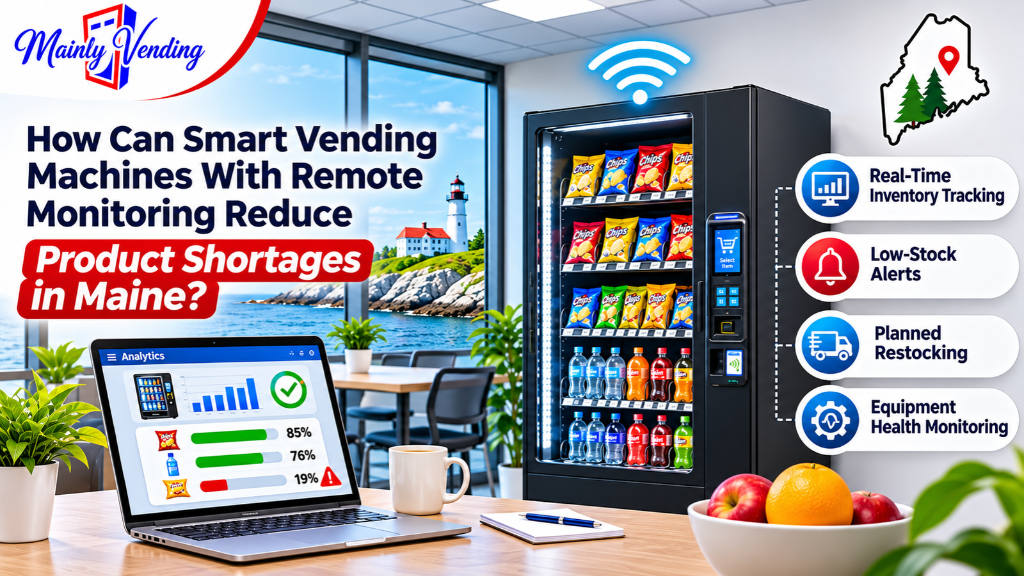
For instance, smart vending machines that have remote monitoring can inform operators of what products require attention and when machines need to be refilled instead of scheduled visits.
What Are Smart Vending Machines With Remote Monitoring?
Traditional vending machines generally require operators to inspect inventory during service visits or estimate restocking needs from previous sales.
Smart vending machines take a different approach.
Connected monitoring technology can send information about product purchases, estimated inventory levels, payment activity, and equipment performance to a remote management platform.
Depending on the machine’s capabilities, operators can access this information through a computer or mobile device.
For example, if employees purchase most of the bottled water before Wednesday afternoon, the system can help identify the shortage risk.
The vending provider can then adjust the next delivery instead of waiting for someone to report an empty machine.
Not every smart vending machine includes the same monitoring features, so businesses should confirm available capabilities before installation.
How Does Remote Monitoring Prevent Product Shortages?
The biggest benefit of remote monitoring is visibility.
Operators can decide when to restock, using actual sales and inventory data, rather than trying to predict which machines may need attention.
1. Identifying Low-Stock Products Early
Connected vending machines can alert operators when the inventory level is below a user-defined amount.
This will let you see things that may be out of stock before your next planned trip.
2. Tracking Popular Snacks and Drinks
What one worker wants is not what another wants.
Some workplaces sell more energy drinks. Others have more of a need for bottled water, chips, or protein bars.
Sales reports provide the provider with information regarding purchasing trends and a chance to alter product quantities.
3. Planning Better Restocking Routes
Vending teams can use remote inventory data to prioritize service locations.
A busy machine in a busy warehouse may need to be visited sooner. A busy machine with a lot of inventory may not need to be serviced immediately.
This allows for more responsive replenishment of workplace demand.
Why Are Smart Vending Machines Useful for Maine Businesses?
The work environment is different in each Maine workplace.
An office in Portland might be open during normal business hours, but a manufacturing plant in Bangor could have people working overnight.
You can’t have a vending schedule that will work for both places.
Reliable Vending Services Maine employers should understand these differences.
Inventory reports can help the provider to see changing buying habits and adjust future deliveries.
This flexibility helps to ensure a more reliable refreshment without the need for managers to constantly check on the machines.
Can Remote Monitoring Reduce Vending Machine Maintenance Problems?
And employees don’t always quit using vending machines because of product shortages.
Service interruptions may also occur due to payment failures, dispensing problems, and refrigeration issues.
There are some networked vending systems that report abnormal operating conditions and equipment failures.
If a machine is having repeated payment errors, the operator may be informed that maintenance is needed.
But remote monitoring doesn’t fix equipment.
Mechanical problems need to be studied and fixed by a technician.
The point is that you can find out about problems earlier, and the service provider can do the right thing.
In comparing Workplace Vending Services, the maintenance process should be compared equally with the availability of products.
How Can Smart Vending Improve Office Coffee and Refreshment Services?
At a place of work, a good break room usually has more than just packaged snacks.
Employees may also enjoy coffee, cold drinks, healthier choices, and easy food options.
Looking for Maine office coffee and vending service? Think of the ways in which refreshment solutions combine.
There are vending machines for drinks and packaged snacks 24 hours a day, but office coffee equipment is available for those employees who want hot drinks.
Technology can track vending inventory, but coffee machines need their own compatible monitoring system or routine maintenance check.
The right refreshment services can help make breaks at work easier.
Micro Market vs Vending Machine: Which Offers Better Inventory Control?
The micro market vs vending machine debate usually boils down to the size of the workplace, the amount of space available, and what the employees prefer.
Traditional vending machines lock products in a box and dispense one item at a time.
Micromarkets are small self-service convenience stores that contain shelves, refrigerated display cases, and electronic checkout systems.
Sales reporting and inventory management tech can help both formats.
Micro markets, however, might need more physical inventory counts, especially for fresh foods.
Smaller offices could be good candidates for connected vending machines.
If the facility is larger and the demand for the product is higher, micromarkets with more selection may be selected.
It’s not just technology; it’s what the workplace needs to make the right decision.
Can Smart Vending Work Alongside Catering Services in Maine?
The workplace has more refreshments than the vending machine.
Maine Catering can also be used by businesses planning conferences, employee meetings, or staff appreciation events.
Vending machines are used for daily needs, while catering is used for scheduled meals and larger groups.
For instance, a manufacturing company may have vending machines for daily breaks and catered lunches during employee training.
These options are complementary, as they meet different dietary needs.
Remote vending monitoring does not apply to catering orders, but the integration of refreshment services can provide a more convenient workplace food solution for employers.
Why Consider Mainly Vending for Workplace Refreshments?
Selecting a vending provider is more than just selecting equipment.
Employers should think about restocking reliability, product selection, service communication, and maintenance.
Mainly, vending is a great place for Maine businesses to begin with workplace vending and breakroom refreshment options.
If you’re talking about service, ask them if they offer any remote monitoring of inventory, how they determine restocking schedules, and what happens when equipment needs to be repaired.
Clear answers help employers select arrangements that are compatible with their operations.
The aim is simple: simple refreshments, fewer needless shortages, and less everyday input from the managers at work.
Frequently Asked Questions
1. How do smart vending machines track inventory?
Compatible machines estimate remaining products using transaction records and associated monitoring technology and send inventory information to vending operators.
2. Can remote monitoring completely prevent vending shortages?
Nope. There can still be shortages due to unexpected demand, connectivity problems, and delivery delays. Monitoring allows operators to identify hazards and respond more quickly.
3. Are smart vending machines suitable for small Maine offices?
Yeah. Smaller workplaces can benefit from connected vending equipment, where the setup is practical from the perspective of product demand and service needs.
4. Do smart vending machines require internet access?
Remote monitoring usually requires connectivity (often cellular networks or compatible Internet).
5. Can employers request healthier vending products?
Vending providers will often try to accommodate product preferences, based on availability, compatibility with the machines, and anticipated purchase demand.
Conclusion
An empty vending machine shouldn’t be a regular source of workplace frustration.
With smart monitoring technology, operators can see demand for product, identify low inventory, and make better decisions about restocking.
That could mean more convenience and less time spent reporting shortages for Maine employers.
Companies looking at Mainly Vending can discuss their workplace refreshment requirements, the monitoring they have in place, and the service arrangements that will work for them.
Call Mainly Vending to learn more about vending solutions tailored to your workplace’s day-to-day needs.