Imagine walking into the break room at work on a busy afternoon. You only have ten minutes until your next meeting, and all you want is a cold drink and something to eat. Sorry, the vending machine is almost out of stock.
This may seem like a small inconvenience, but when this happens consistently, employees start losing faith in the service.
For Maine businesses, keeping vending machines stocked is about more than simply filling shelves. It’s about providing reliable refreshments without adding extra responsibilities to the office manager’s workload. Mainly Vending understands the importance of keeping workplace vending machines stocked, maintained, and ready for employees throughout the day.
So how often should vending companies refill machines in Maine, and what should employers expect from their vendors?
Let’s talk about how workplace vending schedules really work.
How Often Are Workplace Vending Machines Restocked?
There isn’t a universally applicable restocking schedule for every business.
A small accounting office in Bangor might sell fewer snacks than a busy manufacturing plant that operates 24/7. Of course, those places need different service arrangements.
Some common starting schedules include:
- Small offices: Weekly, biweekly, or less frequently, depending on sales.
- Medium-sized workplaces: Approximately once a week when demand supports it.
- Busy warehouses: Two or more visits weekly when product turnover is high.
- Manufacturing facilities: Several visits weekly may be necessary across multiple shifts.
- Fresh food locations: More frequent checks and replenishment based on product shelf life.
These are examples of generic planning, not requirements set by the industry itself. Real visits can vary significantly with the volume of sales and capacity of the machine.
A good provider cares about how fast products disappear rather than the same schedule no matter the demand.
What Factors Determine Vending Machine Restocking Frequency?
A number of factors influence the frequency of visits by a vending company to a workplace.
Number of Employees
Employee numbers are a good starting point.
A factory employing two hundred people will generally require a different refreshment setup than an office employing fifteen.
But the story is not simply about headcount. Some of the employees bring lunch from home, while others routinely purchase drinks, snacks, or meals.
Workplace Operating Hours
Businesses with overnight shifts generally require additional care.
For example, a manufacturing night. lity open three shifts may have vending sales that are consistent during the day and night.
A fully stocked machine Monday morning can be out of its most popular products by Wednesday.
Types of Products
Packaged snacks usually have a longer shelf life than freshly prepared meals.
Refrigerated foods like sandwiches, salads, dairy products, and others need proper temperature controls, expiration checks, and more frequent inventory management.
Seasonal Demand
Businesses in Maine may see seasonal variations in workplace activity.
Some businesses have different staffing patterns in the winter, while others, like tourism-related businesses, might have a larger summer workforce.
Flexible restocking arrangements prevent stockouts when demand increases.
Who Stocks and Maintains Vending Machines in Maine?
Once the equipment is installed, many employers ask who stocks and maintains the vending machines in Maine.
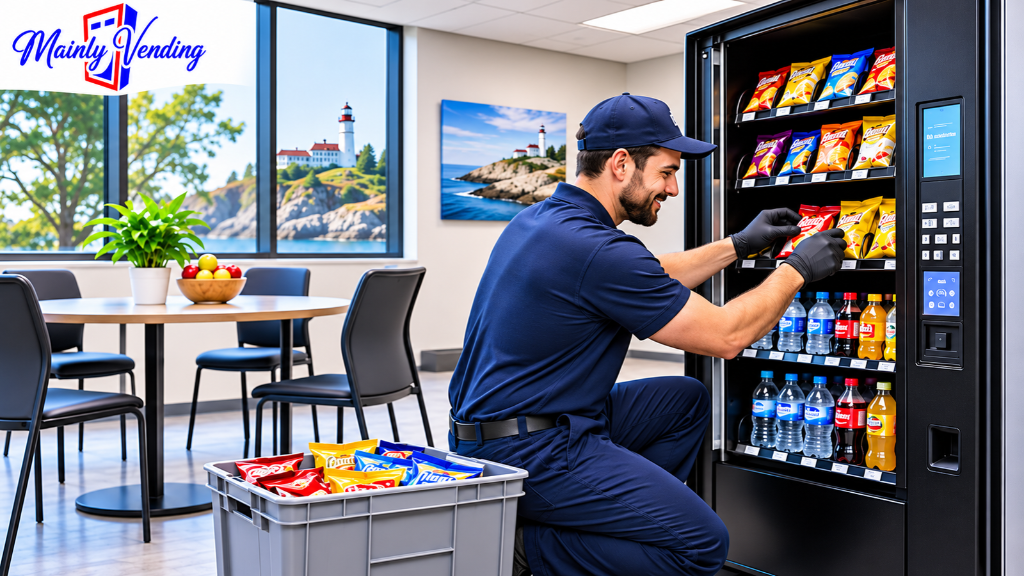
With a full-service vending arrangement, routine operations are usually the responsibility of the provider.
This can include delivering products, taking inventory, cleaning equipment, dealing with payment issues, and organizing repairs.
Employers usually provide a suitable location, electrical access, and any agreed-upon building access for service technicians.
The responsibilities should still be agreed to before signing a contract.
Ask about repairs of equipment, replacement of damaged products, and emergency visits as part of the service.
A reputable provider should also be able to tell you how employees can report problems without waiting for the next scheduled visit.
How Do Vending Companies Know When Machines Need Refilling?
Today, most vending services don’t have someone physically checking each machine.
Many newer machines have remote inventory monitoring systems that monitor purchases and help operators identify products running low.
This allows providers to book visits in advance of popular items selling out.
Think of an office where bottled water and protein bars fly off the shelf, while some candies remain untouched.
The vending operator can then stock more of the frequently purchased products and replace the less popular items, rather than keeping everything on an equal basis.
Employees get more of what they really want. And companies have fewer unnecessary stockouts.
You might want to ask if a potential provider offers remote monitoring, especially for larger workplaces.
How to Choose a Vending Machine Company in Maine
Knowing how to choose a vending machine company in Maine is more than just looking at the snack options.
One of your first thoughts should be restocking reliability.
Ask providers how they decide how often they’ll provide service and whether their schedule can be adjusted when demand at your workplace goes up.
You should also talk about the maintenance response times, the payment options, the product customization, and who handles the complaints.
And local service teams can provide practical benefits when equipment needs service.
Ask for a clear explanation of what happens if a machine runs out of popular items between visits before you choose a provider.
The answers may reveal whether the company is actively managing its equipment or just running a set delivery route.
Micro Market vs Vending Machine: Which Requires More Restocking?
When you compare a micro market vs vending machine, the frequency of restocking is an important consideration.
Traditional vending machines are equipment with enclosed space for dispensing packaged snacks and beverages. They’re particularly good in small areas where staff want easy refreshments.
Micro-markets are small, self-service convenience stores. They can have open shelves, refrigerated coolers, fresh meals, and electronic checkout systems.
Also, micro markets usually have a wider variety of items, especially perishable items, and therefore may require more frequent inventory.
But that does not mean every micromarket should have daily deliveries.
Restocking is dependent on employee purchases, the shelf life of the product, and demand in the workplace.
Micro markets provide more variety for larger Maine workplaces, while traditional vending machines may work for smaller teams.
Can Catering Services in Maine Complement Workplace Vending?
Vending machines are great for everyday refreshments, but they don’t always cover all the workplace food needs.
Other businesses that might want catering services in Maine include those that have employee appreciation lunches, training days, or large meetings.
Catering is provided for scheduled events and also includes full meals. Vending machines dispense drinks and snacks during normal working hours.
For example, a company may offer catered food for a staff training day, but staff still use vending machines the rest of the week.
These services have different purposes, but in combination they can support a more convenient workplace food arrangement.
Why Regular Restocking Matters to Maine Employers
The staff notices when there is always something to eat at work.
A frequent restock prevents machines from being frustrating during short breaks.
It also gives employers a chance to provide healthier snacks, bottled water, and convenient meal options where appropriate.
Good vending service means office administrators are not constantly reporting shortages or chasing equipment repairs.
For companies with multiple shifts, reliable vending access can be especially helpful when neighboring food businesses are closed.
The value is in the consistency and not just in having a vending machine installed.
Frequently Asked Questions
1. How often do vending companies restock machines in Maine?
Replenishment is driven by product demand and traffic in the workplace. High-volume locations may be serviced several times a week, while low-volume machines may be serviced weekly, biweekly, or less often.
2. Do vending companies charge employers for restocking?
Many full-service vending arrangements include restocking within the provider’s operating responsibilities. However, employers should confirm equipment charges, minimum sales requirements, and contract terms.
3. Can employees request different vending machine products?
Yes, many providers let workplaces suggest snacks, drinks, and healthier options. Availability of the product depends on the supplier and the demand you expect.
4. What happens when a vending machine runs out of products?
Employees or workplace managers contact the vending provider. A company that uses remote inventory monitoring can detect a shortage before they receive a complaint.
5. Are micro markets restocked more often than vending machines?
Sometimes fresh foods and refrigerated meals sold through micromarkets tend to require more regular inventory checks. Sales and food safety considerations drive actual replenishment.
Conclusion
The right restocking schedule is not just a matter of how many vending machines a workplace has, but how employees use them.
A small office in Maine may only need to be visited once in a while, but a busy warehouse may need to be restocked several times a week.
When choosing a vendor company, take into account the availability of products, maintenance assistance, flexible scheduling, and employees’ preferences.
A good supplier will make the management of workplace refreshments simple, giving employees easy access to snacks and drinks without adding to the workload of the business.