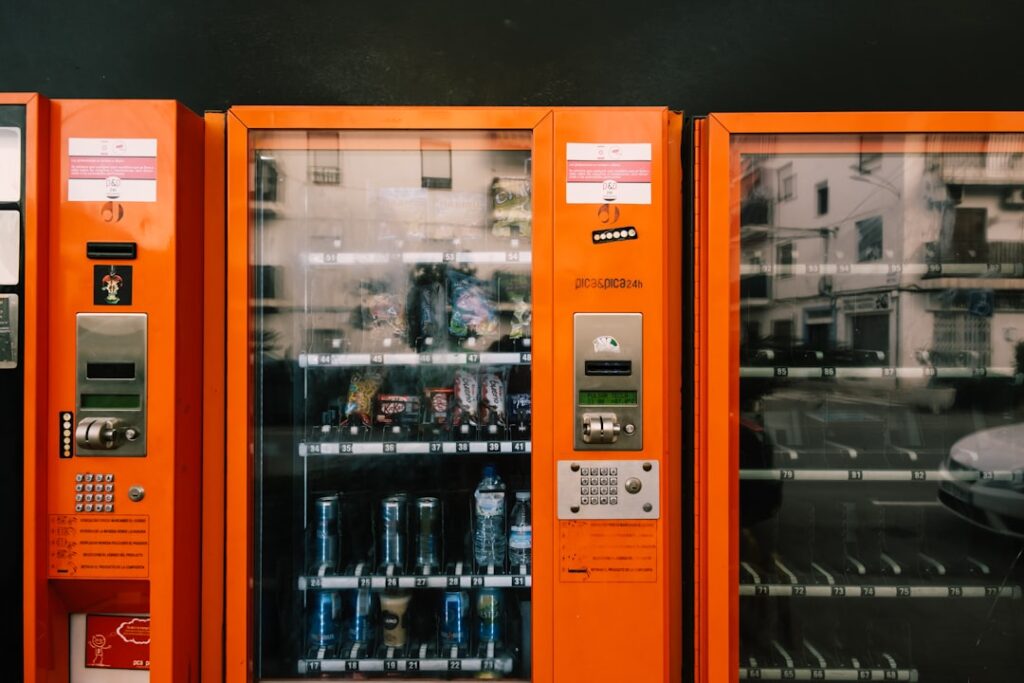
The cost of workplace vending depends less on the price of a machine and more on the operating model. Many qualifying businesses use a full-service arrangement in which the vending company owns, installs, stocks and maintains the equipment. Other workplaces buy, lease or subsidize a program for employees.
Because each model assigns costs and responsibilities differently, a useful estimate begins with workforce size, operating hours, product demand, equipment needs and location access. A quote should state what is included instead of presenting one number without context.
Quick answer: What does vending machine service cost?
For a qualifying workplace, full-service vending may have no direct machine purchase, standard installation or routine maintenance charge to the host. The provider earns revenue from product sales. Costs can arise from electricity, custom site work, employer subsidies or a rental or purchase model. Terms vary by location and agreement.
The main vending pricing models
Full-service placement is designed for sites with enough expected use to support regular service. The operator retains ownership and takes responsibility for inventory and repairs. Machine rental gives the workplace more control but may add a recurring equipment charge and operational duties. Purchasing equipment creates the largest upfront commitment and makes the owner responsible for stocking and maintenance.
A subsidized program is different again: the employer pays part or all of the product cost to offer discounted or complimentary refreshments. Some locations may discuss revenue sharing when sales volume and contract terms support it.
What full-service vending usually includes
A managed program can cover equipment selection, delivery, standard setup, initial products, restocking, product rotation, routine cleaning, payment support and repairs. Smart technology may help the operator monitor sales and stock levels so service can reflect actual use.
Confirm whether machine relocation, damage, custom branding, refunds and special electrical work are included. A low quoted price is not meaningful unless the service scope and response expectations are clear.
Factors that affect the arrangement
Employee count is only one consideration. Multiple shifts, 24-hour access, visitors, nearby food choices and seasonal occupancy can change expected demand. Equipment type also matters: separate snack and beverage machines require more space and inventory than a single combination unit.
The provider also considers travel and access. A secure hospital wing, school campus or rural facility may require scheduled entry, escorts or specific delivery windows. Product mix, fresh-food demand and restocking frequency further influence the operating plan.
Possible indirect or optional costs
The host commonly supplies floor space and electricity. Site preparation might be needed if the chosen location lacks adequate power or delivery access. Optional cabinetry, custom graphics and employer-funded discounts can add costs that should be budgeted separately.
Businesses should also consider internal time for approving the agreement, coordinating installation and communicating the new program. These are not usually provider fees, but they affect implementation.
Buy, rent or use full service?
Buying can suit an organization that wants complete control and has staff to source products, manage cashless systems and perform maintenance. Renting reduces the purchase cost but may still leave stocking and customer service with the workplace. Full service is typically the simplest operational choice when the site qualifies.
The best model is the one that matches the organization’s demand, budget and appetite for day-to-day management. Ask for a side-by-side explanation of responsibilities before deciding.
How to request an accurate quote
Provide the number of employees and visitors, shifts, operating days, break schedules, available space and current refreshment setup. Share whether employees want snacks, drinks, fresh food, coffee or healthier choices. Mention building-access limits and any employer subsidy under consideration.
This information helps a provider recommend equipment and service instead of quoting an unsuitable standard package. For Maine businesses, an onsite or detailed remote assessment can also confirm delivery access and service coverage.
Frequently asked questions
Does a business pay to install a vending machine?
A qualifying full-service location may not pay for standard placement, but site work, special equipment or other optional requirements may be separate.
Who pays for maintenance?
In a typical full-service program, the provider maintains equipment it owns. Purchased or leased equipment may follow different terms.
How much electricity does a vending machine use?
Usage varies by machine type, age, refrigeration and settings. Request equipment-specific information rather than relying on a universal estimate.
Can a small office receive vending service?
Possibly. Operating hours, shifts, visitors and product demand matter alongside employee count. Compact vending or pantry service may also work.
Are cashless payment systems included?
They may be included, but card-reader hardware, processing and supported payment types should be confirmed in the agreement.
Is a site assessment necessary?
It is strongly recommended because space, power, access and expected use determine the right solution.
Take the next step
For a realistic estimate based on your Maine workplace, contact Mainly Vending and request a customized refreshment assessment.
You may also want to see how free vending machine placement works to compare options before requesting a quote.